News
Terra Sancta: NZ's First Regenerative Organic Certified® Winery
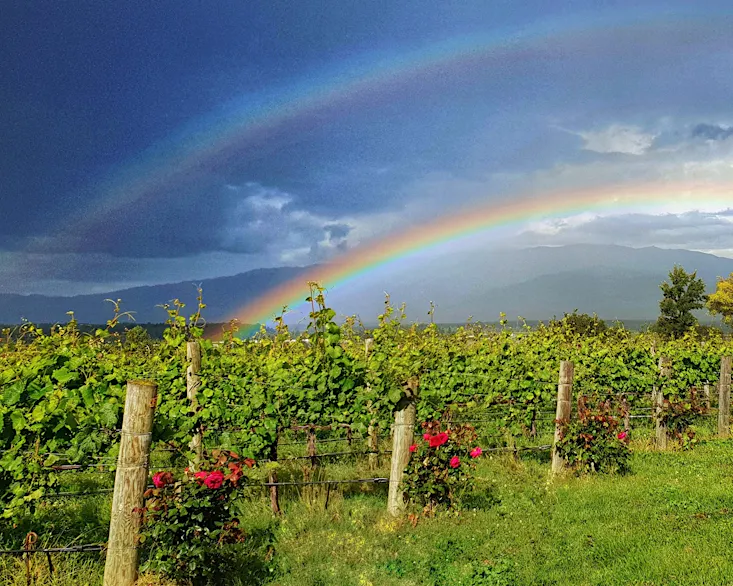
Terra Sancta means sacred earth or special place. Over time, our name has become our farming philosophy.
After more than a decade of regenerative farming, experimentation, and occasionally getting things spectacularly wrong, Terra Sancta has become New Zealand's first Regenerative Organic Certified® winery.
Our entire team is enormously proud of this achievement because of the journey and a shared belief that exceptional, terroir-driven wine starts with healthy, living soils and a thriving vineyard ecosystem.
It all began beneath our feet.
This story began in 2013, when we became concerned by extremely low yields in our Riverblock Chardonnay and started digging soil pits to find out what was going on beneath our feet.
Discovering poor soil structure, low biological activity, or other soil deficiencies was a shock, and it led to a fundamental revision in Terra Sancta’s approach to farming. We then decided to make soil health the key focus of our farming system.
By 2016, we were farming Slapjack and Jackson's Blocks organically and without cultivation, unique in New Zealand viticulture at the time, we believe. Because a core part of the organics playbook is using cultivation to manage weeds, and we didn't want to do that, we wanted to preserve soil structure, build new soils, and keep carbon below ground; there was no manual to follow.
As you would expect without a manual, we learned plenty along the way, including a disastrous 2020 season when our enthusiasm for cover crops got the best of us and overwhelmed the vines on several blocks. Our 2020 experience was an important lesson in balance. Regenerative organic farming isn't just about letting nature take over. It's about working alongside it, understanding what the land needs, and knowing when to intervene.
Today, our vineyards are home to a wonderfully interconnected world of vines, grasses, flowers, insects, chickens, sheep, and the countless organisms living beneath the soil. We weren't following a trend or working towards certification. In fact, we didn't even know the word regenerative then, and it certainly wasn't a buzzword.
We simply believed there was a better way to care for this land and, in doing so, give our vines the best possible chance to produce exceptional fruit.
This works for Terra Sancta because it supports our winemaking approach, which uses 100% Natural Ferments, i.e., native yeast that takes on the characteristics of its direct external ecosystem.

So, what exactly is Regenerative Organic Certified®?
You may have heard the term regenerative farming before. But what does it mean, and how does it differ from organic farming?
Organic certification provides an essential foundation. It establishes standards for how we farm, including which treatments and inputs we can use, and requirements for maintaining healthy soils. But it doesn't provide a playbook for creating a thriving vineyard ecosystem. Regenerative farming goes further. It takes a more holistic approach to the land, focusing on actively building soil health, encouraging biodiversity, minimising soil disturbance, and integrating animals into the farming system.
Regenerative Organic Certified® brings independent rigour to this approach. Building on organic certification, it assesses farming practices against three pillars: soil health and land management, animal welfare, and social fairness. For Terra Sancta, the distinction is important. We didn't simply replace conventional treatments with organic alternatives. We set out to fundamentally change how our vineyards functioned, working with nature rather than simply managing it.
And we've spent more than a decade learning how to do that. Regenerative Organic Certified® is an internationally recognised agricultural certification overseen by the nonprofit Regenerative Organic Alliance (ROA).
It goes beyond organic certification, with independently assessed standards built around three essential pillars.
Soil Health - A living world beneath our feet
Healthy soil is so much more than dirt.
Beneath the surface exists a community of microorganisms, fungi, and other living things that play a vital role in supporting plant life.
Regenerative organic agriculture seeks to nurture this living world through practices such as cover cropping, composting, encouraging biodiversity, and minimising soil disturbance.
At Terra Sancta, this means treating our soil as a living ecosystem worthy of care.
Animal Welfare - Every creature has a part to play
If you've ever visited Terra Sancta, you'll know our vineyards are home to more than just grapevines.
Our Babydoll sheep graze between the rows, helping manage vegetation and returning nutrients to the soil. Our chickens support the vineyard ecosystem through scratching, grazing, and manure.
Beyond their important roles, they've become much-loved members of the Terra Sancta family.
Animal welfare is a fundamental pillar of Regenerative Organic Certified®, which requires consideration of animals' physical wellbeing, humane treatment, and ability to express natural behaviours.
We believe that caring for the land also means caring for the creatures who share it with us.

Why does this matter for our wines?
For us, farming and winemaking have never been separate conversations.
We've always believed that exceptional wines begin with exceptional fruit, and that healthy, living soils create the foundation for thriving vines.
This philosophy has shaped everything we do - including in the winery.
For us, exceptional wine isn't just about achieving high scores. It's about creating wines that express the land's individual character.
Believing in our farming system, and that it will provide exceptionally healthy fruit, gives us the confidence to take a 100% native fermentation approach in the winery, from our Rose to Single Block Pinot Noirs. Native fermentation relies on native yeast on the outside of the grapeskin to start fermentation. This is the opposite of using a packet of purchased yeast.
We strongly believe regenerative farming helps each vineyard express its individual character, structure and flavor. In his review giving Terra Sancta’s Slapjack Block 100 points last year, James Suckling said, “ I was awe-inspired visiting [Terra Sancta’s] vines.”
Why we believe in this winemaking approach is a concept is called microbial terroir: the idea that the microorganisms associated with a vineyard, including yeasts and bacteria, contribute to the individual character of the wines produced from it.
The chain of events is:
Vineyard ecosystem (Soil, vines, flowers, insects, climate, and farming practices)
Leads to:
Microbial communities on the grapes (Naturally occurring yeasts, fungi, and bacteria, which can vary between sites and vintages)
Leads to:
Native fermentation (Microbes from grapes and the winery participate in fermentation, with different populations succeeding one another)
Leads to:
Wine character (Microbial metabolism contributes to aroma, flavour and texture alongside grape composition and winemaking)
Evidence increasingly suggests that, alongside vineyard location, regenerative farming practices can influence microbial communities and, in turn, fermentation and wine composition.
From the power and complexity of Slapjack to the distinctive character of Jackson's Block and the minerality of Riverblock and Shingle Beach, each block and vineyard has its own story to tell.
We believe our farming approach helps those stories find their way into the glass.

A milestone, not a finish line
Achieving Regenerative Organic Certified® status is a wonderful acknowledgment of the journey we've been on for the past decade. Of the lessons learned, the people involved, and the countless creatures who have played their part.
But it doesn't mean our work is finished.
Regenerative organic agriculture is a commitment to continual learning and improvement. There will always be more to understand, more to discover, and more ways to care for this special place.
For now, we're taking a moment to celebrate and to say thank you to everyone who has enjoyed our wines, followed our journey, or shared in our belief that the land deserves care, we're so grateful to have you alongside us.
Cheers to the next chapter!
Terra Sancta. Exceptional wine, from the ground up.
FAQs
What is different from organic? Organic certification is the baseline. ROC adds audited requirements across soil health, and land management, animal welfare, and social fairness.
Does it make the wine taste better? We believe that healthy soils and a thriving vineyard ecosystem will produce exceptional fruit. Given the way that we make wine - 100% Native Ferment / wild yeast on all wines since 2016, having healthy fruit is critical. Furthermore, the idea of microbial terrior - the yeasts being particular to a place - supports the impact of regenerative farming on grape quality and wine distinctiveness. The results back it up.
Why seek certification now? Regenerative feels like a buzzword, and it is easy to claim “regenerative principles’ but we know how hard this is in practice, so we felt it was a good idea to get our regenerative practices independently assessed against a rigorous global standard, and see how we stood up
When does the logo appear in the market? Wines from the 2027 vintage onwards will contain the ROA logo
Is this pioneering? It is a significant point of difference and a New Zealand first in this certification, but “pioneering” would be overstating it.